
Choosing the wrong CPSI can directly lead to failing emissions standards and reduced engine performance. Many purchasers select based on experience rather than engineering logic. We help you accurately match the cell density to your system.
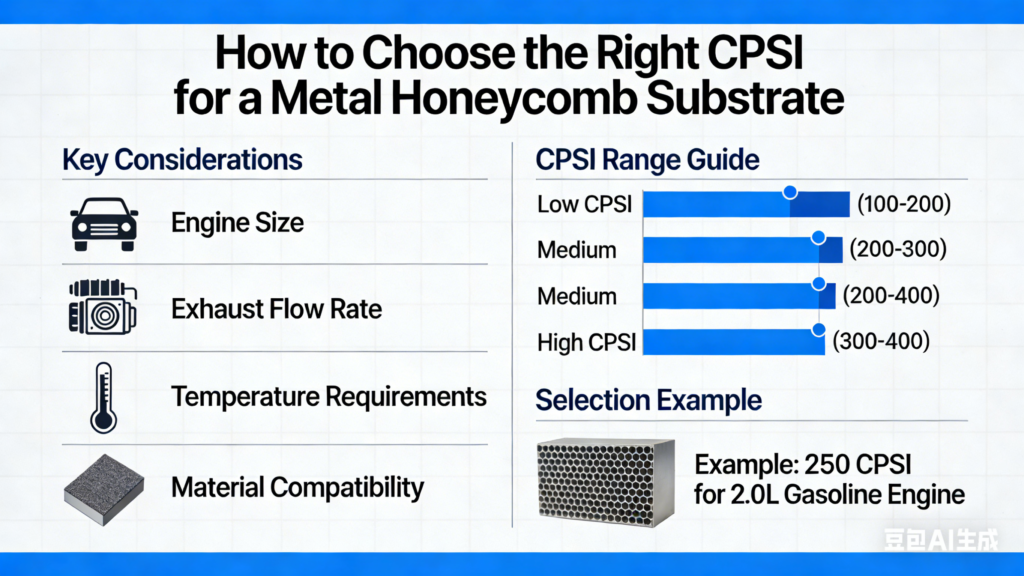
CPSI stands for cells per square inch; the right value balances purification efficiency, exhaust back pressure, and durability. Common specifications are 400, 600, and 900 CPSI. Higher CPSI generally improves purification effectiveness but also increases exhaust resistance.
We have helped hundreds of customers find the optimal CPSI solution for their specific applications.
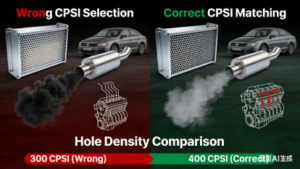
What Does CPSI Actually Mean for Catalyst Performance?
Higher CPSI means more channels and greater surface area. A larger surface area enhances catalytic contact efficiency, reducing exhaust pollutants. However, excessively high cell density can restrict airflow and affect engine performance. Data shows that CPSI directly impacts light-off speed and conversion efficiency [CPSI performance study placeholder link].
When Should You Choose a 400 CPSI Substrate?
400 CPSI is suitable for heavy-duty, high-flow engines. It offers extremely low back pressure and strong resistance to clogging. It is commonly used in trucks, generator sets, and construction machinery, where durability is prioritized over maximum purification efficiency.
When is 600 CPSI the Best Choice?
600 CPSI strikes a balance between efficiency and flow, making it suitable for most passenger vehicles. It meets Euro 5 and Euro 6 standards without sacrificing power. This is our most popular general-purpose model exported worldwide.
When is a 900 CPSI Substrate Appropriate?
900 CPSI provides the highest surface area, making it ideal for stringent emission requirements. It is best suited for compact cars, motorcycles, and small-displacement engines. It is not recommended for high-horsepower engines due to the significant increase in back pressure.
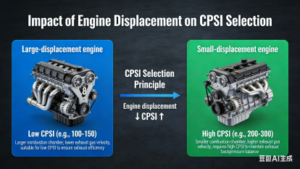
How Does Engine Displacement Affect CPSI Selection?
Larger displacement engines require lower CPSI to ensure unobstructed exhaust flow. Smaller displacement engines can utilize higher CPSI to enhance purification effectiveness. Mismatching CPSI with engine displacement can lead to power loss or emission non-compliance.
Does the Operating Environment Influence CPSI Selection?
In dusty or harsh environments, lower CPSI is recommended to prevent clogging. For clean urban driving conditions, higher CPSI can be used for optimal purification. Off-road vehicles are generally better suited to 400 CPSI.
Frequently Asked Questions
Does CPSI affect fuel consumption?
Yes. Higher CPSI increases back pressure, which can potentially reduce fuel economy. Our engineers will help you balance emission requirements with fuel consumption needs.
Is higher CPSI always better for emissions performance?
Not necessarily. Effectiveness depends on engine type, load, and operating temperature. We provide tailored recommendations based on actual vehicle scenarios.
Can you customize non-standard CPSI?
Yes. We offer custom cell densities for special projects and OEM customers. Dedicated tooling ensures batch-to-batch consistency.
Conclusion
Selecting CPSI is about balancing purification efficiency, exhaust flow, and durability. 400, 600, and 900 CPSI cover the vast majority of global application scenarios. We help you choose the most suitable cell density to meet both emission and performance requirements.