
When sourcing FeCrAl metal honeycomb substrates, are you constantly worried about insufficient high-temperature resistance and short service life? Many manufacturers cut costs by simplifying production processes and using inferior materials, causing substrates to deform and fail rapidly in high-temperature exhaust environments. As a professional manufacturer, we strictly control every aspect of the process and materials, fundamentally ensuring the high-temperature performance of our products.
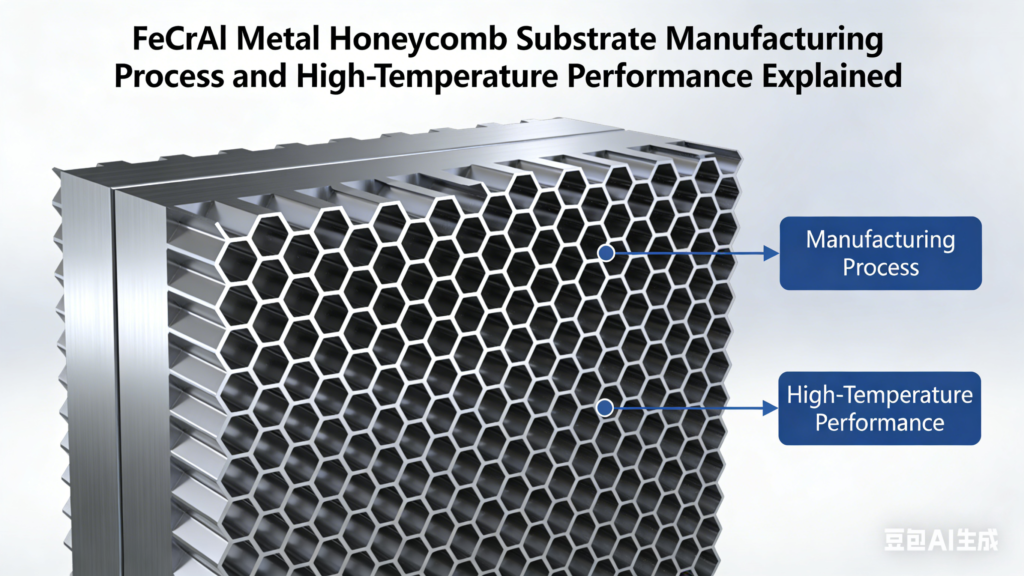
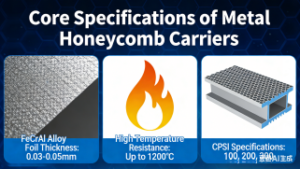
Our FeCrAl metal honeycomb substrates are produced using a comprehensive precision manufacturing process comprising seven core steps from raw material selection to final inspection. We utilize high-purity FeCrAl alloy, capable of withstanding temperatures up to 1200°C, with excellent thermal shock resistance and oxidation resistance. Their service life significantly exceeds industry averages, making them suitable for various high-temperature exhaust applications.
With years of experience in this industry, we have developed a deep understanding of the manufacturing processes and performance characteristics of FeCrAl substrates. Today, we will provide a detailed breakdown, allowing you to clearly understand the core advantages of a high-quality product.
Why Is FeCrAl Material the First Choice for High-Temperature Applications?
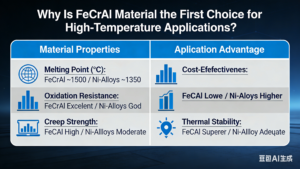
The high-temperature performance of a metal honeycomb substrate depends primarily on the material. FeCrAl alloy has become the industry standard due to its unique material advantages.
The FeCrAl (iron-chromium-aluminum) alloy we use contains ≥20% chromium and ≥5% aluminum. Through a specialized smelting process, it forms a dense oxide film that effectively resists high-temperature oxidation, preventing rapid aging of the substrate in exhaust environments exceeding 1000°C.
Compared to standard stainless steel, FeCrAl alloy offers over 30% better high-temperature performance and maintains a more stable coefficient of thermal expansion. It is less prone to cracking or deformation under rapid thermal cycling conditions. This is key to why our products are suitable for demanding high-temperature applications such as heavy-duty and industrial machinery.
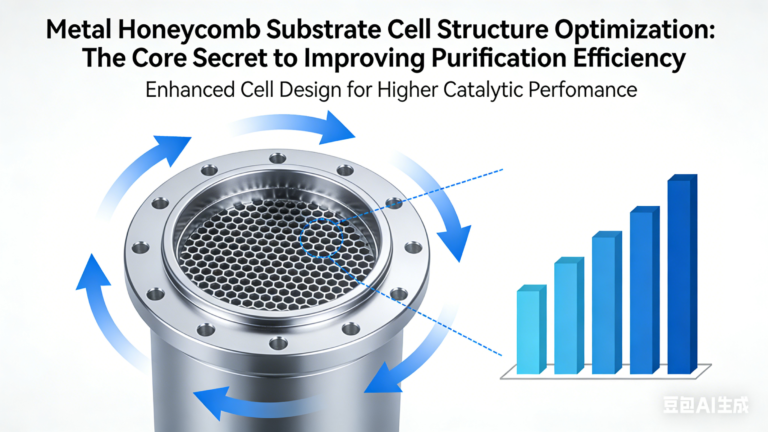
Furthermore, FeCrAl alloy exhibits excellent thermal conductivity, allowing for rapid heating, which helps the catalyst achieve quick light-off and improves exhaust purification efficiency. It effectively combines high-temperature resistance with purification performance.
How Does the Core Manufacturing Process Ensure High-Temperature Performance?
High-quality material requires superior processing. Every step in the production of our FeCrAl substrates is focused on achieving “high-temperature resistance and high stability,” with comprehensive control and strict oversight.
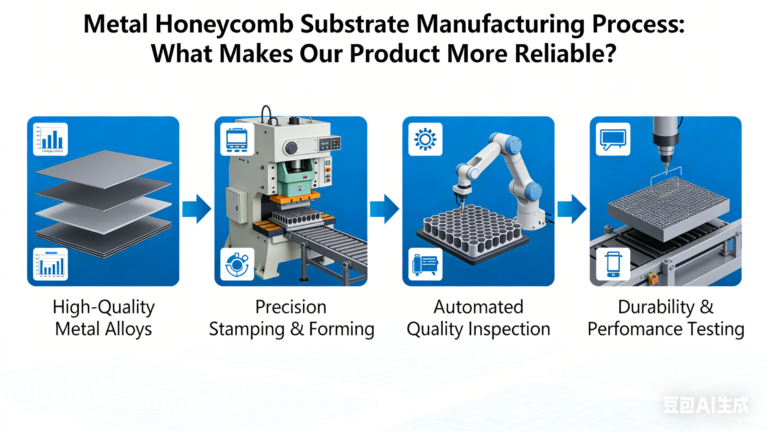
Step 1: Raw Material Selection: We use only high-purity FeCrAl alloy foil that meets international standards, with a thickness controlled between 0.03–0.05 mm. Each batch of raw material undergoes spectral analysis to eliminate impurities and ensure purity standards are met, guaranteeing substrate quality from the source.
Step 2: Foil Pretreatment: The alloy foil undergoes degreasing and annealing treatments to remove surface oils and impurities. This enhances the foil’s ductility and high-temperature stability, preventing breakage or deformation during subsequent forming processes.
Step 3: Corrugation Forming: Precision forming equipment is used to press the flat foil into a uniform corrugated shape. The corrugation pitch is strictly controlled to ensure a uniform cell structure, improving gas flow smoothness and specific surface area while maintaining the structural strength of the substrate.
Critical Process: High-Temperature Brazing – Determining Substrate Service Life
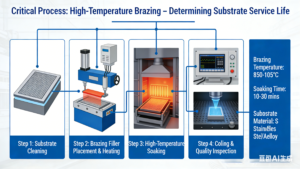
Brazing is the core process in metal substrate manufacturing, directly impacting structural stability and high-temperature performance. We utilize an industry-leading vacuum high-temperature brazing process, which offers significant advantages over standard brazing methods.
Standard brazing uses lower temperatures and results in weaker bonds, making the substrate prone to delamination and cracking under high-temperature conditions. In contrast, our vacuum high-temperature brazing process operates at temperatures between 1100–1200°C, firmly fusing the corrugated and flat foils into an integrated structure.
The vacuum environment prevents oxidation and porosity defects during brazing, enhancing weld strength. This ensures the substrate maintains structural stability and resists failure even in high-temperature, high-vibration exhaust environments.
After brazing, the substrates undergo a high-temperature annealing treatment to relieve welding stresses, further improving their high-temperature stability and thermal shock resistance.
Final Inspection: Every Unit Passes High-Temperature Testing
We adhere to the principle of “no defective products leave the factory.” Each FeCrAl substrate undergoes multiple rounds of inspection, with high-temperature testing being a core component.
Finished products are placed in a high-temperature test chamber and continuously tested at 1200°C for 24 hours. We observe whether the substrate exhibits deformation, cracking, oxidation, or other issues. Only products that fully meet the standards proceed to packaging and shipment.
Additionally, we inspect parameters such as dimensional accuracy, cell uniformity, and structural strength. This ensures every product meets customer application requirements, particularly for demanding, high-temperature scenarios in overseas markets.
Frequently Asked Questions
What is the service life of FeCrAl substrates?
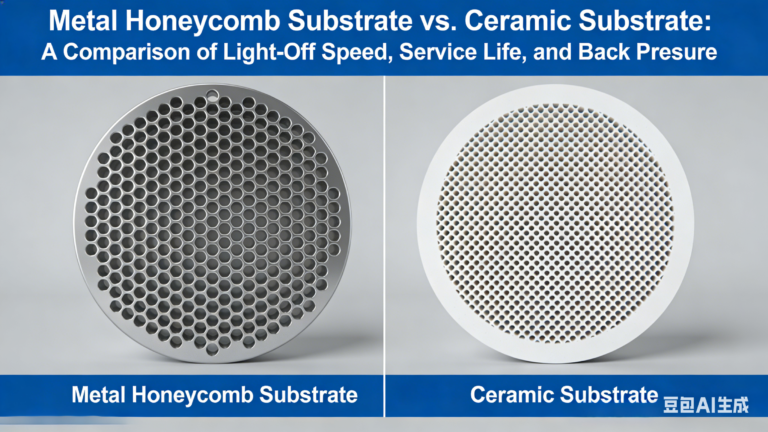
In standard passenger vehicle applications, the service life can reach 80,000–100,000 kilometers. In demanding, high-temperature applications such as heavy-duty and industrial machinery, the service life can reach 50,000–80,000 kilometers, significantly exceeding that of standard stainless steel or ceramic substrates.
Does the purification efficiency of the substrate decrease under high-temperature conditions?
No. Our FeCrAl substrates maintain stable high-temperature performance. Within normal exhaust temperatures (below 1000°C), they maintain a stable structure and specific surface area. Purification efficiency does not decrease due to high temperatures, allowing them to consistently meet stringent emission requirements over the long term.
Is there a significant cost difference between FeCrAl substrates and standard stainless steel substrates?
The raw material cost of FeCrAl substrates is slightly higher than that of standard stainless steel substrates. However, considering long-term use, they offer a longer service life and lower failure rates, resulting in better overall cost-effectiveness. This makes them particularly suitable for overseas customers with high-temperature performance requirements.
Conclusion
The high-temperature performance of FeCrAl metal honeycomb substrates stems from high-quality materials combined with precision manufacturing processes. By rigorously controlling every step of production, we create products with excellent high-temperature resistance, high stability, and long service life, helping global customers meet the demands of various high-temperature exhaust applications.