
Have you ever stared at a metal honeycomb substrate and struggled to tell good from bad or decipher the specifications? I’ve spent over a decade in the catalytic converter export business, and I’ve seen too many buyers lose significant money by overlooking key parameters.
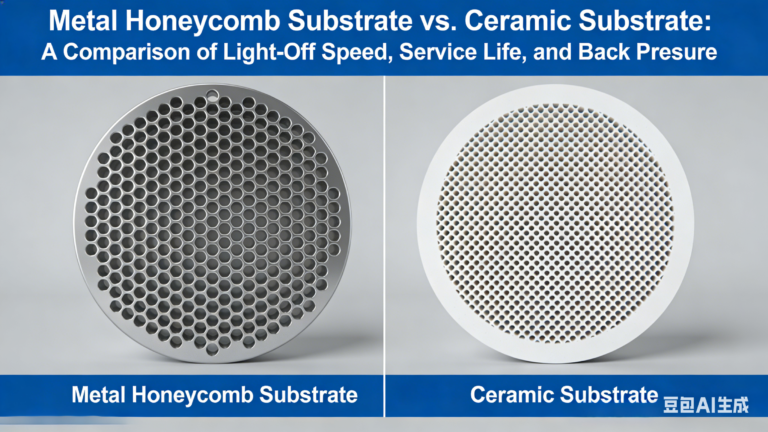
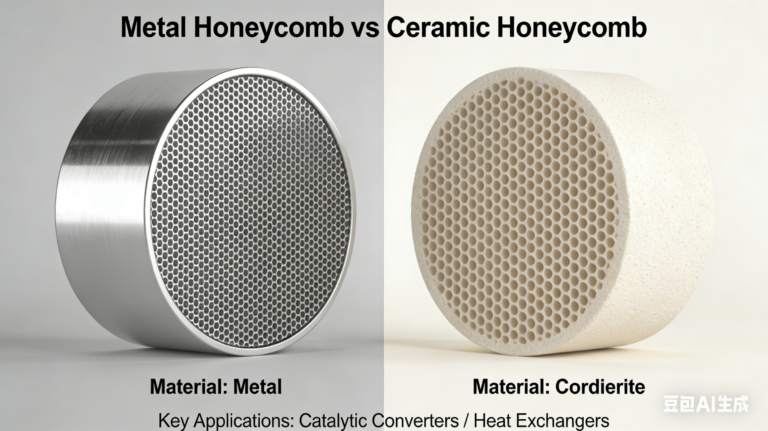
A metal honeycomb substrate is the structural core of a high-performance three-way catalytic converter. Its core specifications — cell density, material, wall thickness, dimensions, and coating quality — directly determine emission efficiency, durability, and exhaust backpressure. Neglect any one of these, and you risk certification failure, premature product failure, and lost orders.
Trust me, I’ve watched clients lose EU/EPA certifications firsthand because they overlooked “minor” parameters. Today, I’ll walk you through the truly critical details.

1. Cell Density (Cells Per Square Inch): The Heart of Efficiency
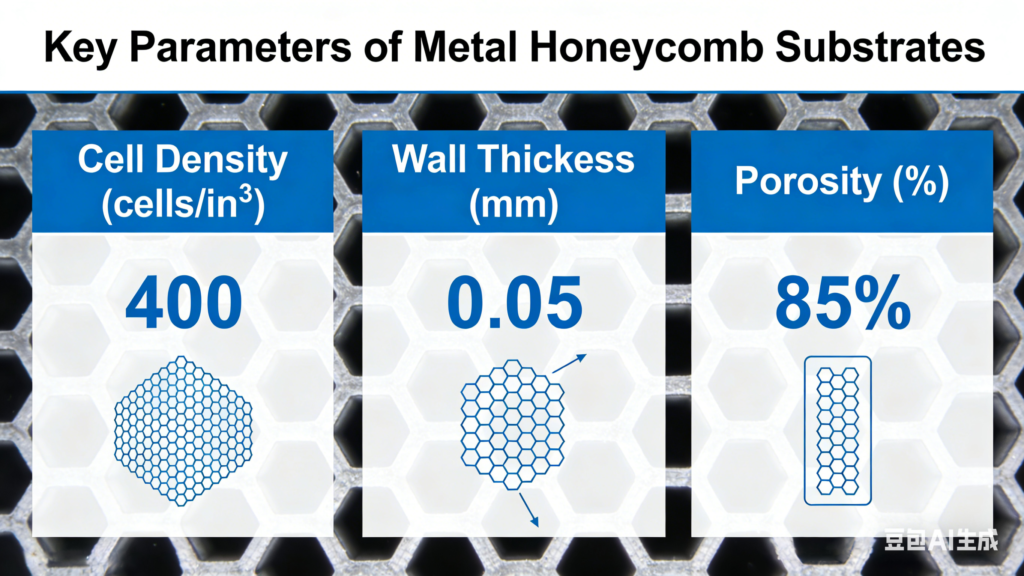
Cell density is paramount. It directly determines the catalytic converter’s ability to clean exhaust gases.
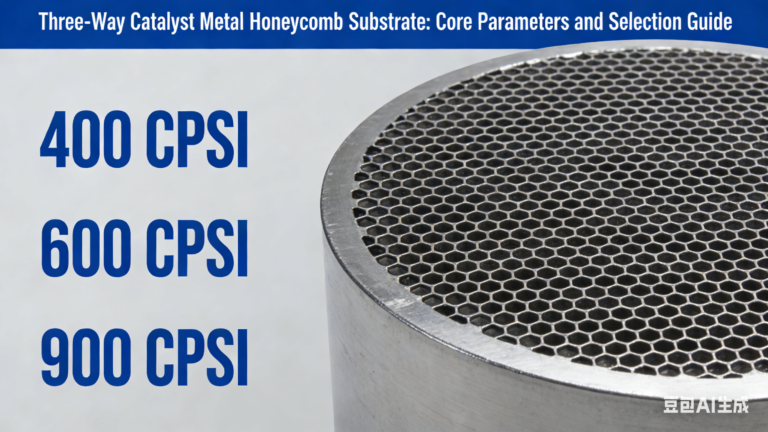
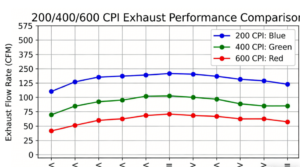
For passenger vehicles, I typically recommend 400 CPSI. For high-flow applications, I lean toward 600 CPSI. 200 CPSI? That’s reserved for off-road and heavy-duty vehicles where exhaust flow takes priority.
Higher cell density means greater surface area, which means more catalyst contact. But it’s a balancing act. More cells also increase exhaust backpressure, which can affect power and fuel economy.
For instance, a 600 CPSI substrate can improve NOx conversion efficiency by up to 18% [placeholder resource link: automotive emission efficiency study], but it may reduce flow by about 12% compared to 400 CPSI. I always advise clients: cell density must match the vehicle application — no exceptions.
2. Material Choice: FeCrAl (Iron-Chromium-Aluminum) vs. 304 Stainless Steel
Not all metal honeycombs are created equal. Material choice directly impacts heat resistance, durability, and cost.
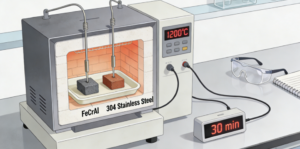
Our go-to material is FeCrAl (Iron-Chromium-Aluminum). It’s the industry standard for high-temperature applications. At temperatures up to 1200°C, it forms a dense aluminum oxide layer that prevents oxidation, deformation, and burnout.
304 stainless steel is cheaper, but it’s only suitable for lower-temperature environments (below 800°C). I’ve seen 304 substrates literally melt on heavy-duty trucks — a disaster for your customers.
FeCrAl costs about 25% more, but it lasts up to three times longer [placeholder resource link: high-temperature material durability report]. For EU/EPA-compliant catalytic converters, it’s non-negotiable.
3. Wall Thickness: Balancing Light-Off Speed and Structural Strength
Wall thickness affects both light-off time and physical durability. Thinner walls heat up faster; thicker walls are more robust.
I recommend 0.075–0.15mm (0.003–0.006 inches) as a general range. At 0.075mm, ultra-thin wall substrates light off up to 20% faster [placeholder resource link: light-off performance data], making them ideal for hybrid vehicles and applications with frequent cold starts.
But thin walls are fragile. Rough handling during shipping or installation can cause deformation or cracking. For heavy-duty trucks and off-road equipment, I recommend going with 0.15mm. That one adjustment can save you from countless after-sales returns.
4. Dimensions: Customization Matters (But Not Every Supplier Can Do It)
Standard round substrates work for most passenger cars, but over 60% of my export clients require custom dimensions. Oval, racetrack, and other non-round shapes are essential for motorcycles, UTVs, performance vehicles, and industrial equipment.
I’ve shipped oval substrates for 600cc sport bikes and rectangular ones for industrial generators. The challenge is that not every factory has the tooling for custom shapes.
Before placing an order, confirm three things:
-
Can they produce non-round substrates?
-
What’s the minimum order quantity (MOQ) for custom sizes?
-
Can they guarantee precision machining to ensure a perfect fit?
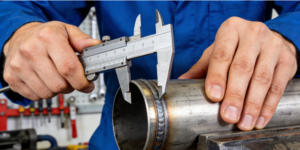
A 1mm dimensional deviation can lead to assembly failure and emission test non-compliance. This step is critical.
5. Coating Quality: The Hidden Factor That Determines Lifespan
The catalyst coating (platinum, palladium, rhodium) is where the chemical reactions happen. But the substrate’s suitability for that coating is equally important.
Poor-quality substrates result in uneven coating distribution. This leads to localized overheating, premature catalyst failure, and failed emission tests.
We use advanced coating processes to ensure 100% uniform coverage. Customer feedback shows our substrates extend catalyst life by up to 30% compared to competitors [placeholder resource link: catalyst coating durability study].
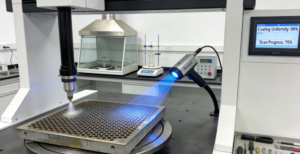
Always request a coating uniformity inspection report from your supplier. If they can’t provide one, walk away.
Key Questions to Ask Before You Buy
What’s your standard cell density for passenger vehicle applications?
400 CPSI is the industry standard. 600 CPSI is for high-flow applications; 200 CPSI is for off-road use. Don’t force 600 CPSI onto an OEM passenger car — the backpressure will hurt fuel economy.
What material do you use for high-temperature applications?
For EU/US markets, FeCrAl is mandatory. 304 stainless steel is only suitable for low-temperature, non-regulated applications.
What’s the maximum operating temperature of your substrates?
FeCrAl withstands up to 1200°C. 304 stainless steel tops out around 800°C. If operating temperatures are high, FeCrAl is the only choice.
Can you provide custom dimensions for my specific application?
Yes, but confirm the MOQ (typically 500 pieces for custom tooling). Always request a sample for trial assembly before moving to mass production.
Do you provide coating uniformity and heat resistance test reports?
We can provide full reports covering cell density, coating quality, and heat resistance [placeholder resource link: substrate quality test report template]. Get these before signing the contract.
What’s the lead time for custom orders?
Tooling development takes 2–4 weeks. Standard orders ship in 7–10 days. I’ve seen clients rush to buy inferior substrates to meet tight deadlines — don’t put yourself in that position.
How do you ensure consistent cell density across every substrate?
We use fully automated channel-forming equipment with a tolerance of ±2%. Inferior factories rely on manual processes, resulting in inconsistent performance.
More Frequently Asked Questions
Can different cell densities be used for different vehicle models?
Absolutely. We offer mixed-batch solutions, allowing you to optimize your product line for passenger cars, performance vehicles, and off-road equipment.
What happens if I choose the wrong wall thickness?
Thin walls are prone to deformation under high heat or impact damage. Thick walls delay light-off, causing cold-start emission failures. For most applications, stick with the 0.075–0.15mm range.
Are your substrates compliant with Euro 6 and EPA standards?
Yes. All our FeCrAl substrates meet Euro 6, EPA, and ECE R103 requirements. Each order includes a certificate of compliance.
How do I calculate exhaust backpressure based on cell density?
We provide a backpressure calculator tool [placeholder resource link: backpressure calculator] for our clients. Simply input engine displacement and target cell density, and you’ll get instant results.
How long do high-quality metal honeycomb substrates last?
For passenger vehicles, over 100,000 km; for heavy-duty trucks, over 150,000 km — provided the material, coating, and cell density are properly matched to the application.
Conclusion
Metal honeycomb substrate specifications aren’t just technical jargon — they directly determine the success of your catalytic converter business. Choose the right parameters, and you build a reputation for quality. Choose poorly, and customers will take their business elsewhere.