
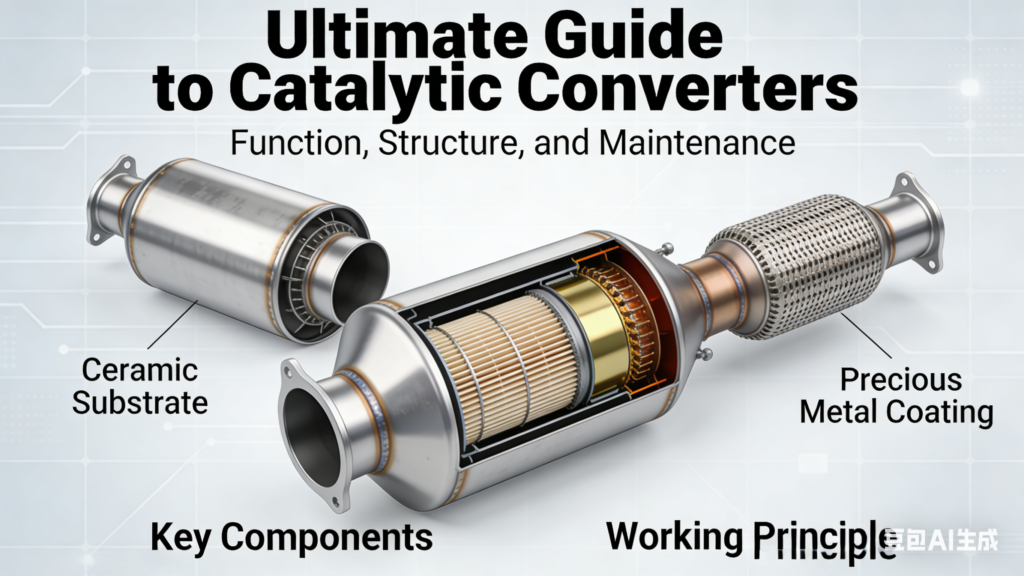
Ever stared at the underside of your car and wondered what that metal box is doing there?
That lump of metal is doing some serious heavy lifting.
It’s scrubbing your exhaust clean, removing three major pollutants in one go.
I’ve spent years working with these devices, from the raw metal honeycomb inside to the finished assembly. And honestly, most people don’t give them nearly enough credit.
A three-way catalytic converter (TWC) is an emissions control device that simultaneously converts carbon monoxide, hydrocarbons, and nitrogen oxides into harmless gases—carbon dioxide, water vapor, and nitrogen. It’s called “three-way” because it tackles three pollutants at once, using precious metals like platinum, palladium, and rhodium coated on a high-temperature substrate. Without it, your car would fail every modern emissions test on the planet.
But here’s the thing.
Not all converters are built the same. And if you’re in the business of sourcing them—whether for OEM production, aftermarket sales, or performance builds—you need to know what separates a reliable unit from a ticking time bomb.
Let’s dig in.
How Does a Three-Way Catalyst Actually Work?
I like to think of it as a miniature chemical factory.
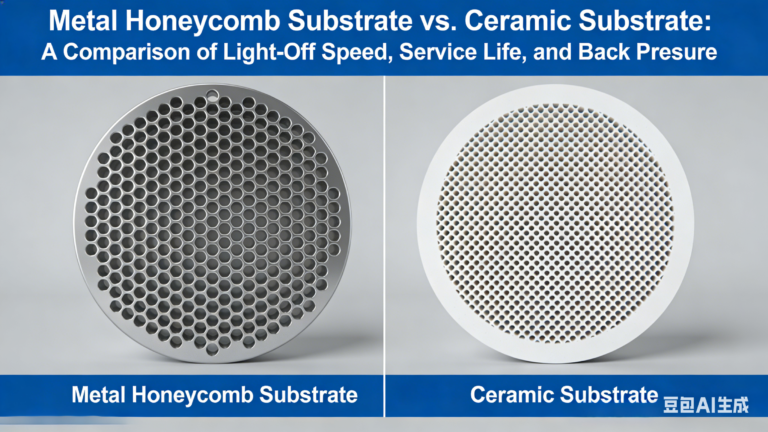
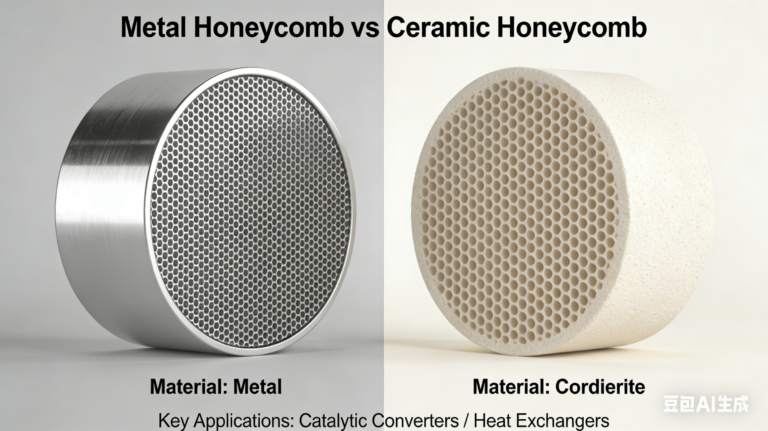
Exhaust gases flow into the converter and pass through a substrate—usually a ceramic or metal honeycomb structure coated with a washcoat containing precious metals.
As the gases pass over these metals, chemical reactions happen.
Carbon monoxide gets oxidized into carbon dioxide. Unburned hydrocarbons get the same treatment. And the tricky one—nitrogen oxides—get reduced into nitrogen and oxygen.
Three pollutants. Three reactions. All happening simultaneously inside a metal can that sits quietly under your car.
The magic happens because of the substrate surface area.
A typical metal honeycomb substrate packs hundreds of tiny channels per square inch. More surface area means more catalyst contact. More contact means cleaner exhaust.
That’s why we obsess over cell density.
Metal vs. Ceramic: Which One Wins?
This is the question I get asked most often.
Ceramic substrates are cheaper. They’ve been around for decades. Most stock vehicles roll off the line with them.
But here’s where I get opinionated.
Metal honeycomb substrates handle heat better. Way better.
When your engine runs hard, exhaust temperatures can soar past 900°C. Ceramic can crack under thermal stress. Metal? It shrugs it off.
Then there’s light-off time.
Hybrid vehicles start and stop their engines constantly. Every cold start requires the catalyst to “light off” quickly—meaning reach operating temperature.
Metal substrates heat up faster. Thinner walls mean less thermal mass. Less thermal mass means the catalyst starts working sooner.
That’s why you’ll find metal substrates dominating the hybrid market.
And if you need custom shapes? Metal wins again.
Need an oval substrate for a motorcycle? A racetrack shape for a tight engine bay? Metal can be formed into almost anything. Ceramic is brittle and limited.
For more technical data on substrate durability testing, check out this [placeholder resource link on thermal cycling standards].
Where Do Three-Way Converters Show Up?
You might think they’re only on cars.
Not even close.
Passenger vehicles are the obvious one. Every gasoline car sold in regulated markets has one—often two if it’s a high-performance model with close-coupled and underfloor units.
Hybrid vehicles are where metal substrates really shine. The frequent stop-start cycles demand fast light-off and superior durability.
Motorcycles use them too. Space is tight, so oval metal substrates are the go-to solution. A typical 600cc sport bike needs a compact converter that doesn’t rob power.
Off-road equipment like UTVs, ATVs, and even generators are increasingly regulated. If it burns gasoline and goes off-road, it probably needs a catalytic converter somewhere in the system.
Industrial applications are less common but real. VOC abatement systems use similar substrate technology to clean exhaust from printing presses, paint booths, and chemical plants.
For a deeper dive into motorcycle-specific requirements, see this [placeholder resource link on Euro 5 motorcycle emissions standards].
What Should You Look for When Sourcing?
If you’re buying these for your business, here’s my checklist.
Material matters.
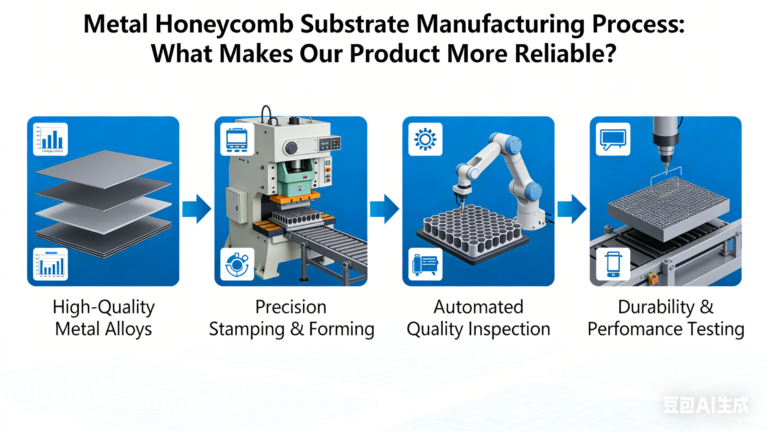
FeCrAlloy (iron-chromium-aluminum) is the standard for metal substrates. It forms a protective aluminum oxide layer at high temperatures that prevents degradation. Stainless steel 304 works for lower-temperature applications, but for anything near the engine, go FeCrAlloy.
Cell density needs to match the application.
400 CPSI (cells per square inch) is common for passenger cars. 600 CPSI offers more surface area but higher backpressure. 200 to 300 CPSI works well for high-flow performance applications and motorcycles.
Wall thickness affects performance.
Ultra-thin wall substrates light off faster. They also create less backpressure. But they’re more delicate during handling. Know your production process before committing.
Custom shapes require proper tooling.
If you need oval or racetrack profiles, make sure your supplier has the tooling to produce them consistently. I’ve seen too many projects delayed because a supplier promised custom shapes they couldn’t actually manufacture.
Certifications aren’t optional for regulated markets.
Selling into the US aftermarket? You need CARB or EPA compliance depending on the state. European market? ECE R103 certification matters. Don’t skip this step unless you enjoy angry customer calls and legal trouble.
For current CARB compliance requirements, here’s a [placeholder resource link to CARB executive orders database].
Common Questions I Get About Three-Way Converters
Why do some converters fail?
Heat kills them. Excessive fuel in the exhaust (from misfires or running rich) creates unburned fuel that combusts inside the converter. That pushes temperatures past what the substrate can handle. The metal melts, the ceramic cracks, and you’re looking at a replacement.
Can I clean a clogged converter?
Sometimes. If it’s just carbon buildup, a proper cleaning procedure might help. But if the substrate is physically damaged or the precious metal coating is depleted, replacement is the only option.
What’s the difference between a three-way and a two-way?
Two-way converters only handle carbon monoxide and hydrocarbons. They don’t touch nitrogen oxides. You’ll find them on older vehicles and some industrial applications, but modern gasoline engines require three-way.
Are metal substrates more expensive?
Yes, upfront. But the durability and performance benefits often justify the cost, especially for hybrid, performance, or tight-space applications where ceramic simply won’t work.
How long should a catalytic converter last?
In a properly running engine, a quality converter should last 100,000 miles or more. Engine issues like oil burning or persistent misfires will kill it much faster.
Conclusion
Three-way catalytic converters aren’t glamorous. But they’re essential. Whether you’re building hybrid vehicles that demand fast light-off, custom motorcycles that need oval substrates, or just replacing a failed unit on a family sedan, understanding what’s inside matters.
Choose metal for durability and flexibility. Match cell density to your application. And never compromise on material quality.
Your exhaust system will thank you. And so will the air we all breathe.