
Are you struggling to choose between a metal and a ceramic catalyst carrier for your exhaust system? Many engineers and procurement professionals spend weeks testing, only to end up with subpar performance or excessive costs. We can help you avoid these pitfalls.
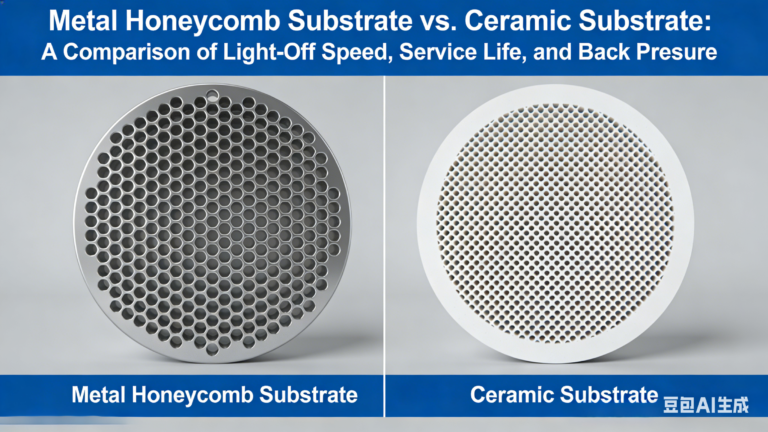
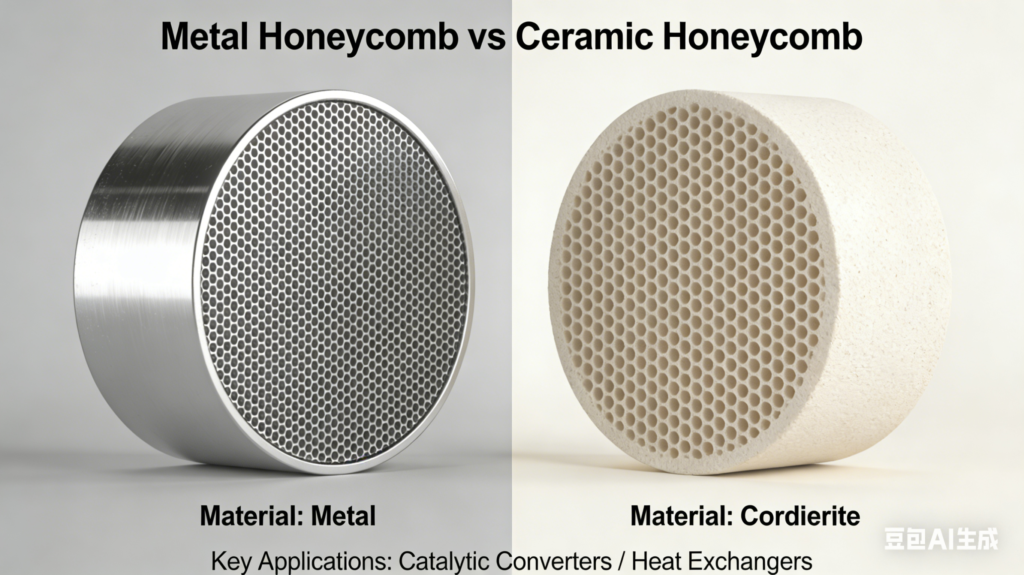
Metal honeycomb substrates offer faster light-off, greater durability, and lower back pressure, while ceramic substrates are more cost-effective for standard applications. The optimal choice depends on emission standards, engine type, operating environment, and budget. As a manufacturer of both substrate types, we serve the global aftermarket and OEM customers.
With over a decade of experience in metal substrate production, we understand exactly which scenarios suit each material best.
What is a Metal Honeycomb Catalyst Carrier?
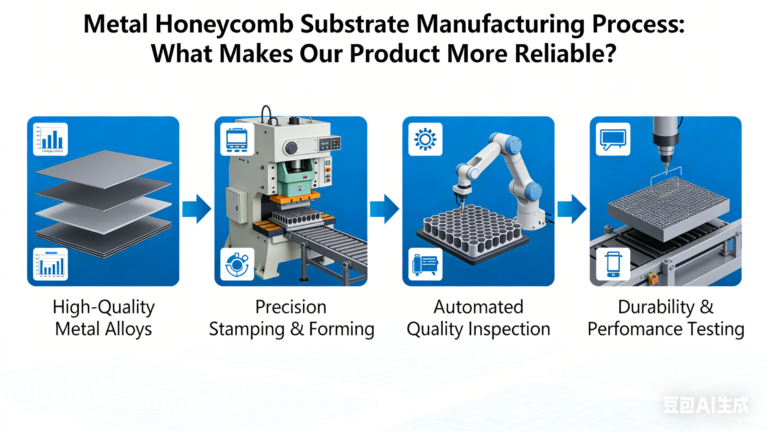
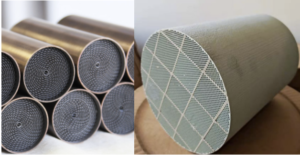
A metal honeycomb carrier is a core component made from ultra-thin iron-chromium-aluminum (FeCrAl) alloy foil. It is processed into a honeycomb structure to hold the catalyst coating. We utilize a high-temperature brazing process to ensure the carrier remains structurally stable even under extreme heat.
What is a Ceramic Catalyst Carrier?
Ceramic carriers are typically made primarily from cordierite, a high-temperature-resistant ceramic material. They are formed into a honeycomb structure through an extrusion process and are widely used in standard vehicle models. Due to their lower material cost, they remain a popular choice for high-volume mass production.
Comparison of Heat Resistance and Durability
Metal substrates offer significantly better thermal shock resistance than ceramic ones. Under rapid thermal cycling conditions, the metal structure is far less prone to cracking. Ceramic substrates are more likely to fracture under severe conditions, especially in heavy-duty engines. Research data shows that in off-road machinery applications, metal substrates can extend lifespan by [XX]% [Data placeholder link].
Which Offers Better Exhaust Flow and Lower Back Pressure?
Metal honeycombs feature thinner walls, allowing for smoother gas flow and lower back pressure. Lower back pressure enhances engine efficiency and fuel economy. Ceramic substrates have relatively thicker walls, resulting in slightly higher exhaust resistance. Our optimized metal structures can achieve a [XX]% reduction in back pressure in actual tests [Back pressure data placeholder link].
Which Achieves Light-Off Temperature Faster?
Metal substrates heat up more quickly, leading to superior emission performance during cold starts. Faster light-off speed is critical for meeting stringent regulations such as Euro 6 and China 6. Ceramic substrates take longer to reach their optimal operating temperature. This difference directly impacts cold-start emission performance [Light-off data placeholder link].
Which is Better Suited for Heavy-Duty and Industrial Engines?
Metal substrates demonstrate superior performance in trucks, generator sets, and construction machinery. They are more resistant to vibration, high temperatures, and prolonged high-intensity loads. Ceramic is more commonly used for light-duty passenger vehicles operating under standard conditions. We provide customized metal substrates for heavy-duty equipment manufacturers worldwide.
Which Offers Better Cost-Effectiveness in the Long Term?
While metal substrates have a slightly higher initial purchase cost, they typically result in lower long-term failure rates. Ceramic substrates have a lower upfront cost but may require more frequent replacement. For fleets and industrial equipment, metal substrates generally offer superior overall value.
Frequently Asked Questions
Can metal honeycomb substrates meet Euro 6 and China 6 emission standards?
Yes. Our metal substrates support high-precision catalyst coatings and offer fast light-off speeds. They are widely used in vehicles compliant with Euro 6, China 6, and EPA standards. The structural design maximizes the contact area between exhaust gases and the catalyst.
Do metal and ceramic substrates support non-standard size customization?
We offer full-size customization, including round, oval, racetrack, and other shapes. Adaptations are available for automobiles, motorcycles, and industrial equipment. We can produce substrates with various cell densities ranging from 200 to 900 CPSI.
How does cell density (CPSI) affect the performance of the two substrate types?
Higher CPSI generally improves purification efficiency but can increase back pressure. The thin walls of metal substrates allow for high CPSI without excessively impacting exhaust flow. Ceramic substrates, with their thicker walls, limit the application of high-density structures. We recommend the most suitable CPSI based on the engine and emission targets.
Conclusion
Metal substrates offer advantages in performance, durability, and applications requiring strict emission control. Ceramic substrates are suitable for standard, cost-sensitive light-duty vehicle scenarios. As a specialized manufacturer, we can help you select the optimal solution based on your project requirements.